Terminal
Terminal is a game element that can be used by Murphy as a remote detonator. Activating a terminal explodes all yellow disks.
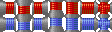
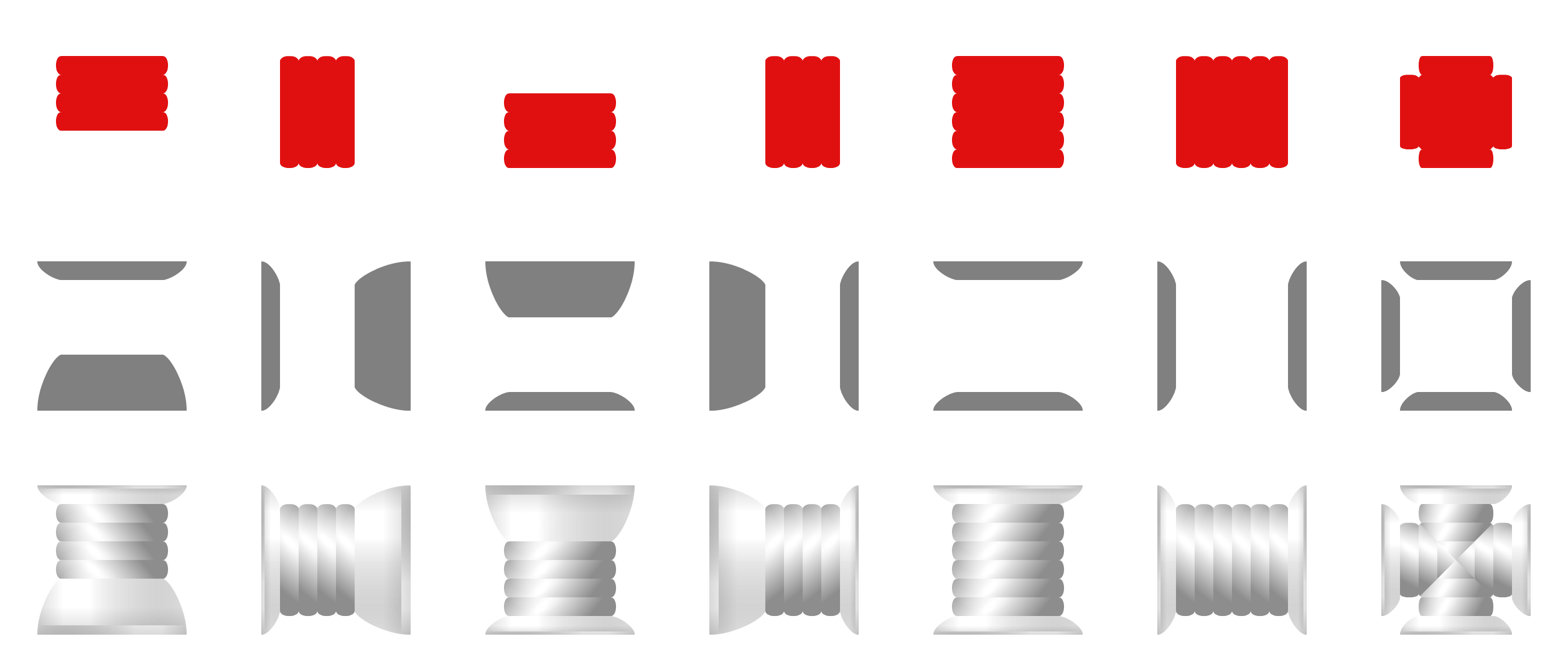
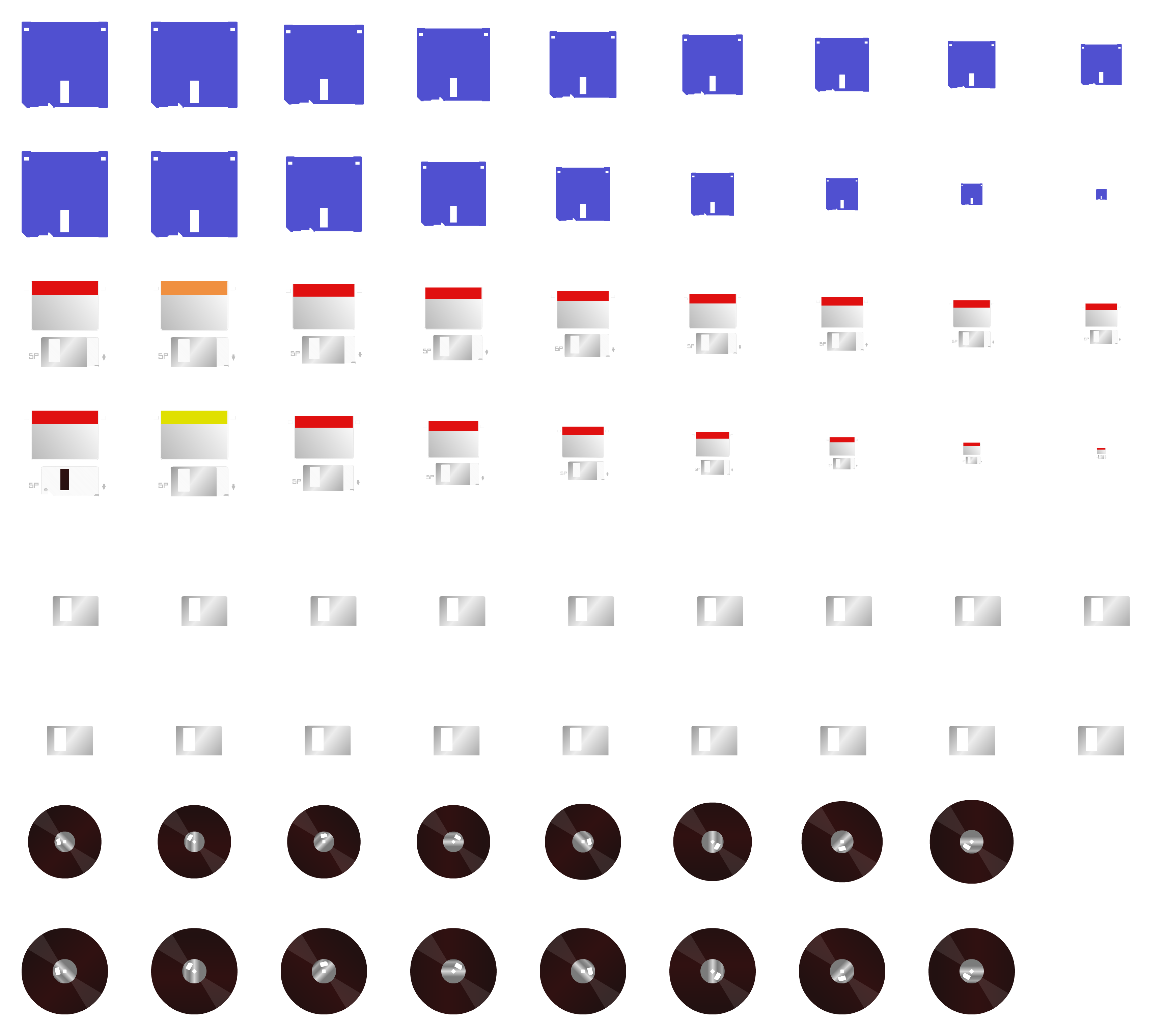
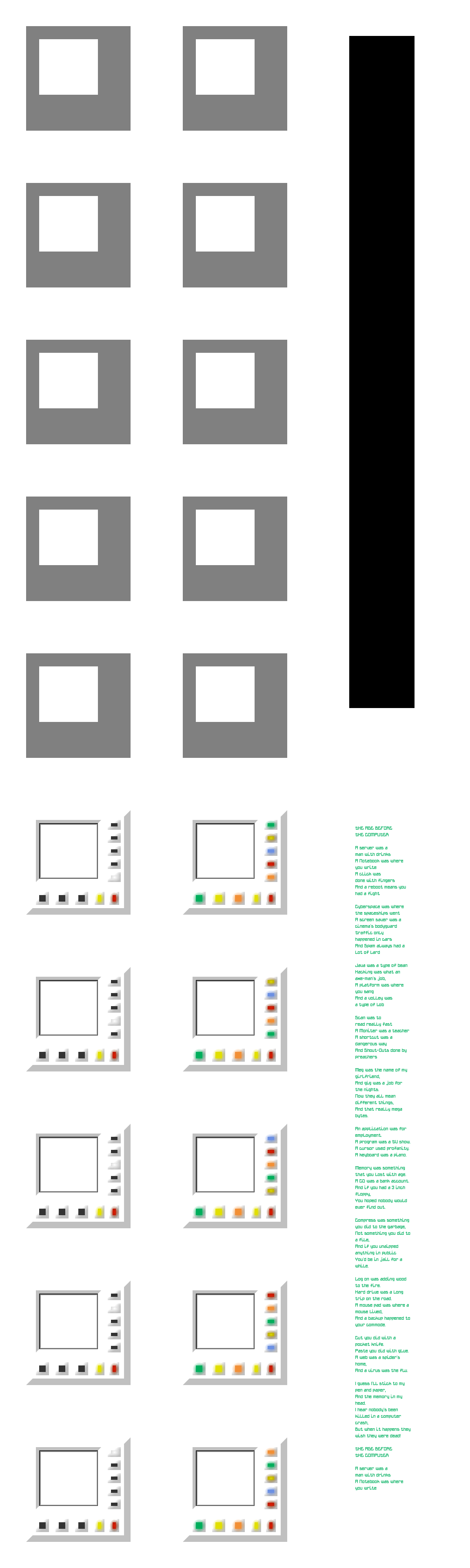
Terminals have a small screen with randomly scrolling text, with flashing lights on the right and colorful buttons below. Extreme zoom on vector renderer lets the player read the scrolling text, which is a small easter egg. Activating the Terminal makes the buttons change color and speeds up the scrolling on all terminals on the level. In Megaplex the activated terminal also changes the screen and text color, making it distinct from other terminals. Supaplex Online replicates this.
Terminals can only be used once. Activating them for the second time has no effect. If Terminal is activated by pressing it then Murphy will look in its direction. Zapping won’t do that, which is probably an unintended omission. Supaplex Online renderers replicate this, but it might change in the future.
Typical use
Terminals are usually used in Sokoban-style puzzles. Murphy has to transport and plant the yellow disks in appropriate places, so their explosion opens new paths. Terminals can also be used as level decoration. Often the terminal is located very close to the yellow disks, but sometimes they can be located in distant area. Reaching a terminal after yellow disks are planted might be a separate big task.
Instant, but in order
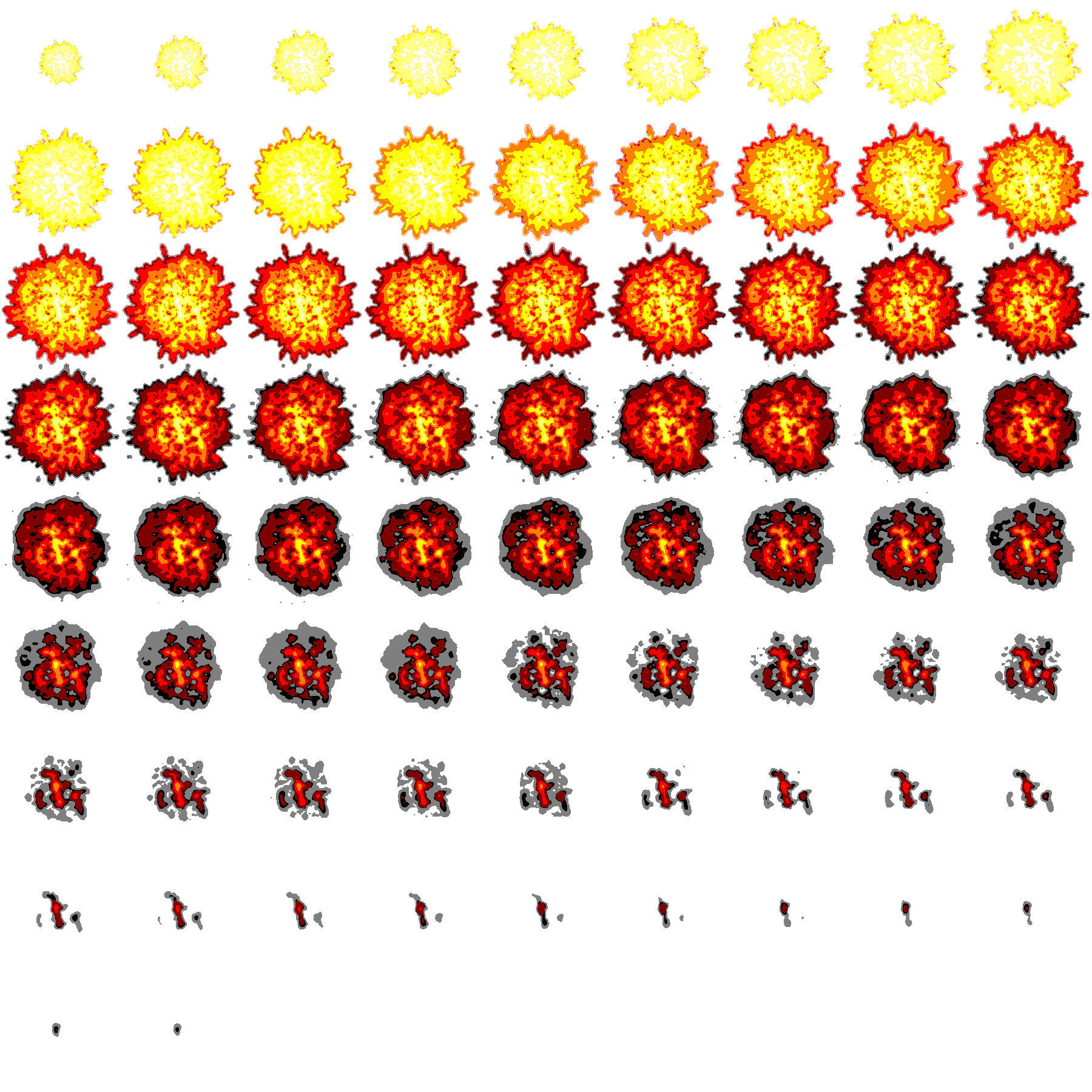
Once a terminal is activated all yellow disks will explode within the same tick, but they are evaluated from top right of the level to bottom left. An exploding yellow disk might destroy another yellow disk that has not yet been evaluated (because it is to the right of the currently evaluated disk or lower). Destroyed yellow disk will be consumed by the first explosion and will cause a chain explosion after a small delay.
Interactions
Terminals can be destroyed in explosions like chips, but are not rounded. Level makers might use them in place of chips when a non-rounded destructible tile is needed. Exits and ports can also be used this way.
Terminal trap
I didn’t mean to press that!
Sometimes terminals are used as traps, and their activation causes destruction of objects vital to success. Level makers might place terminals in clever spots that can easily be pressed by Murphy by accident, failing the level. A dummy Murphy might be placed next to an inaccessible yellow disk, making terminal activation instantly fatal. The KMS version of the second level of the original set Exit is essentially a maze made with trap terminals, which makes it very easy to accidentally activate when Murphy needs to turn a corner.
Self-destructing terminal
This terminal will self-destruct in zero seconds.
Sometimes terminals and yellow disks are placed near each other. This causes the terminal to be consumed by explosion the moment it is activated. This poses a risk, because if the terminal is activated by pressing it and the player fails to press it only for 1 tick then Murphy will run into the explosion in the next tick, which is fatal.
However terminals can also be activated by zapping. Zapping has the advantage of making sure Murphy won’t move into an explosion cloud if the terminal is consumed in a yellow disk explosion right after activation.
Out of range
Activating a terminal will explode all yellow disks present on the level. However if a yellow disk is pushed beyond level borders it will be out of range of the terminals and won’t explode. After a terminal is used the yellow disk can be pushed back inside level boundaries and it will behave normally. Touching a terminal a second time won’t trigger the saved yellow disk, because terminals can only be used once.
Terminal randomness
The scrolling text on terminals progresses randomly by calling the random number generator, which makes terminals affect the general randomness of events. Adding a decorative terminal to an existing demo will change the pattern of activation of bugged bases, which can alter the outcome of the demo. It has no real use in normal play.
Special terminals
Special terminals offer additional options to level makers, as they can be configured with various parameters. Special terminals can be numbered and be connected with yellow disks that bear the same number. This allows level makers to include multiple separate sokoban puzzles in one level, or combine multiple sets of terminals and yellow disks in a complex sequence that Murphy has to figure out.
Each special terminal has the following parameters:
- current address: a number, defines which group of yellow disks are currently addressed by the terminal
- valid addresses: a list of address that this terminal can cycle through and activate
- cycle length: terminals cycle through the addresses they can point to and this defines cycle length in ticks; if cycle length is zero Murphy will be able to manually switch between cycles by zapping the terminal
- range: defines how far this terminal will look for yellow disks to detonate
- use limit: defines how many times the terminal can activate the same address
Special terminals can address 256 distinct groups of yellow disks within one level at maximum. The currently addressed group is displayed on the screen on the body of the terminal in hexadecimal form.
Regular yellow disks are considered a group with address number zero. Regular terminals are basically special terminals with the following config: current address 0, valid addresses only 0, cycle length 0, range 0 (the entire level) and use limit of 1.
Low range and multi-use special terminals allow the option of activating yellow disks one by one. Murphy can push all yellow disks out of range of the terminal and plant only one of them in a useful spot that is in range. After activation other yellow disks can be brought in range and used in similar manner.