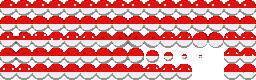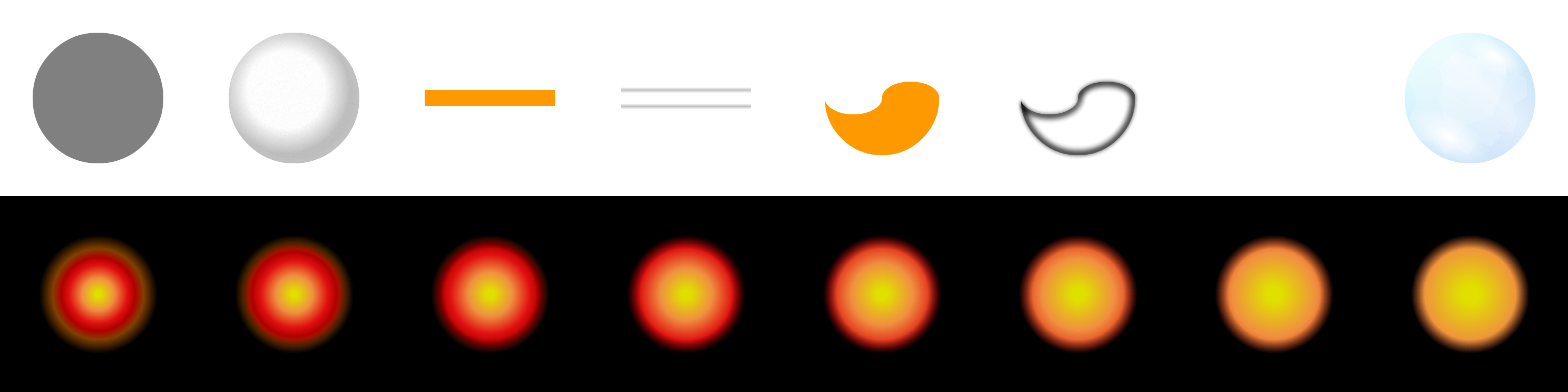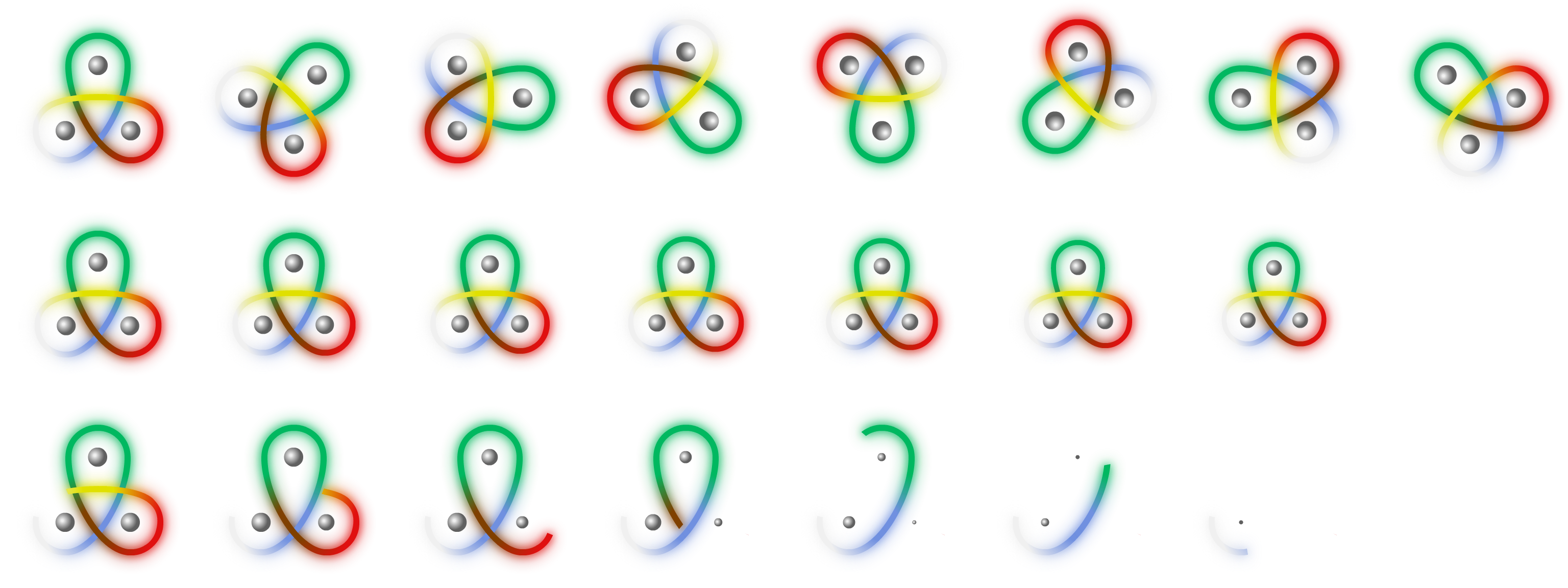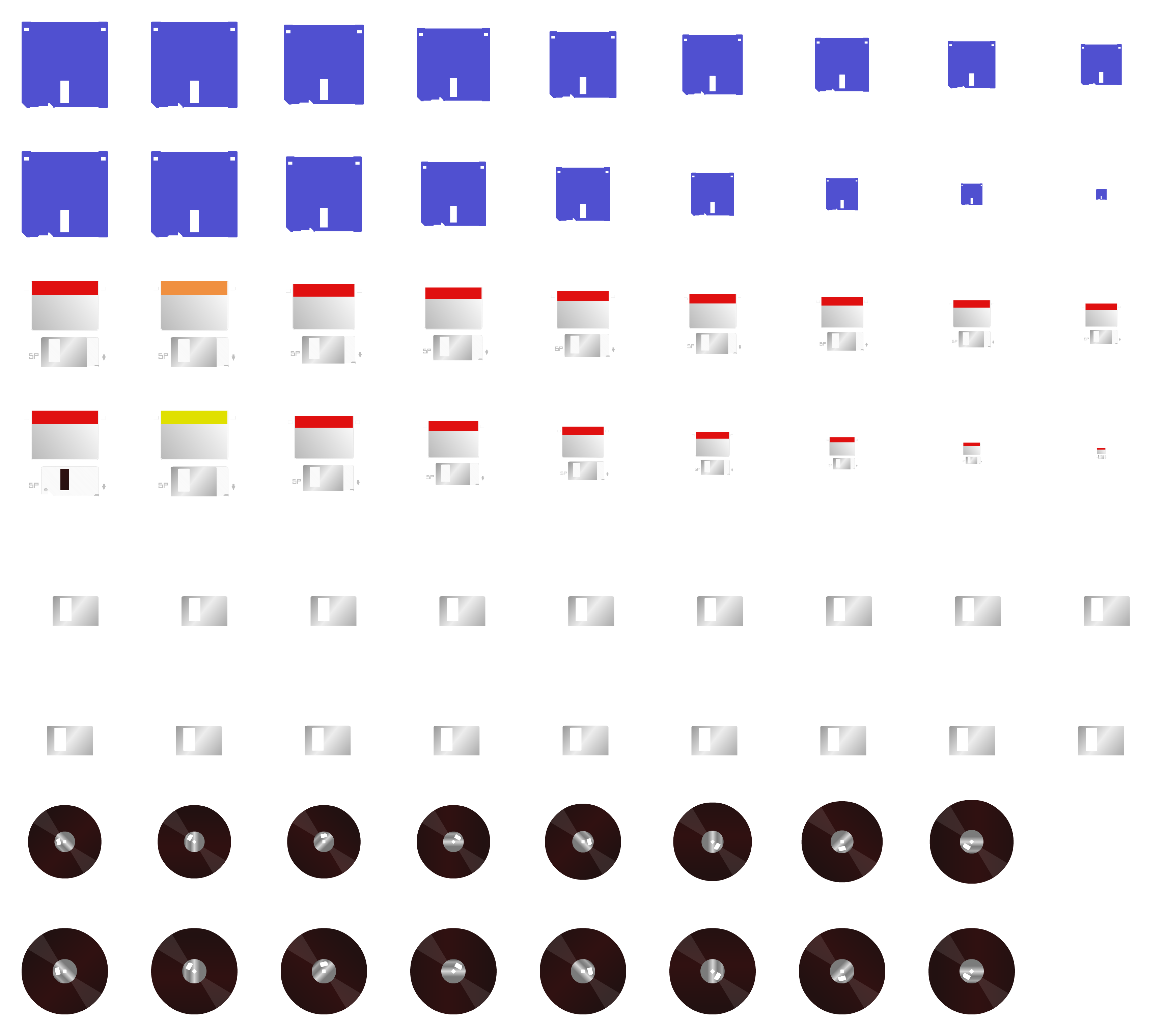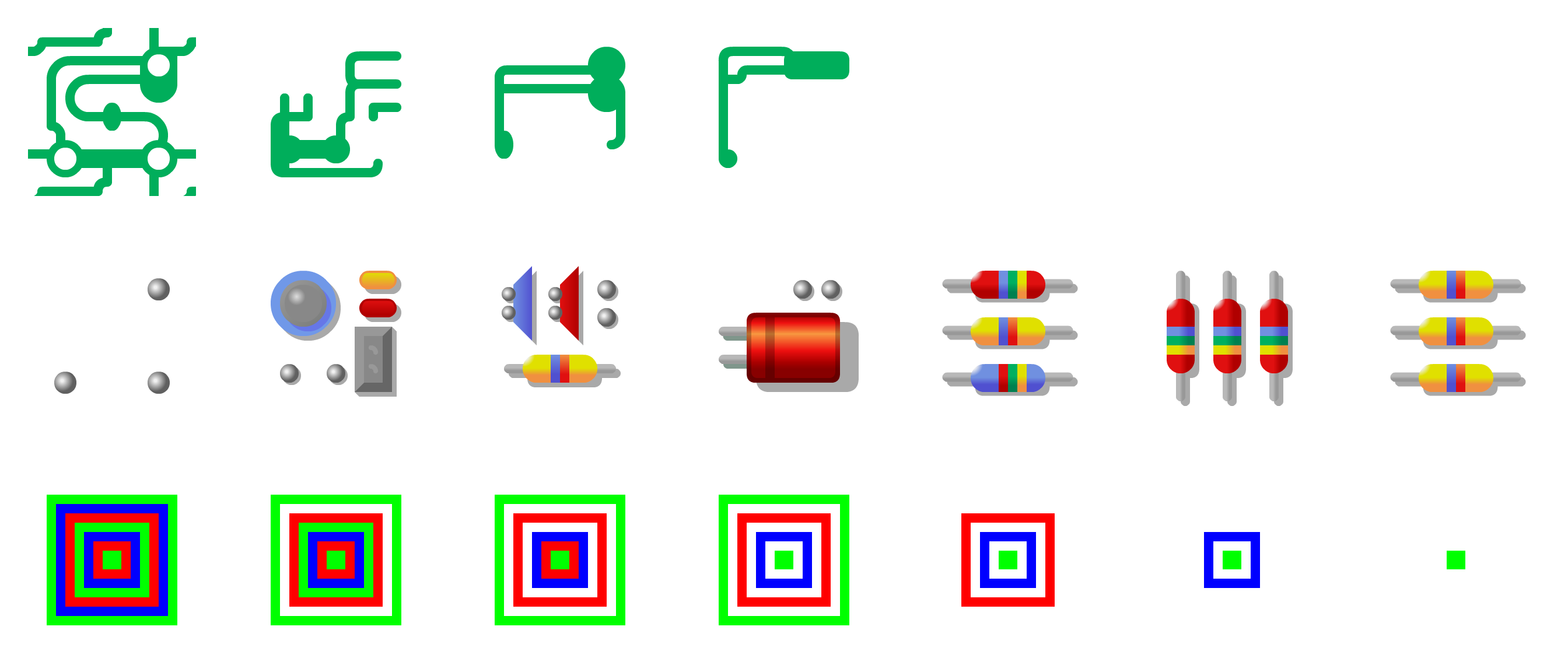
Space
A space - or an empty tile - represents apparent emptiness, but it is anything but insignificant. Space is the fundamental substrate of the game world. Every level is initially composed of it, and every object exists in relation to it.
Space is what allows movement to occur. Space is the default medium for movement, falling, and object interactions, making it essential to understanding game physics. When a zonk falls, it does so because there is a space below it. When an infotron is snapped, it leaves behind Space. In this way, space is the silent enabler of all change. More than just absence, space is the medium through which time expresses itself. Objects advance, fall, roll, explode, and transform only because space provides the vacancy required for state transitions. Without space, there would be no motion, no cause and effect. Space appears empty, but it is far more than actual nothingness.
Most objects can only move freely over space tiles. Only Murphy is capable of consuming bases, which occupy space but are not otherwise traversable by other entities. This interaction emphasises Murphy’s unique role as the active agent in the game’s puzzles.
Tiles located on the first and last row on each level usually contain level border, but space tiles in these two locations are devoid of time. Objects that enter these tiles become frozen, because they stop updating. Only Murphy is immune to this effect.
In a very real sense, space is the canvas of Supaplex: invisible, passive, yet absolutely fundamental to the existence and behaviour of every other object.
Space also assists movement of objects by providing reservations that ensure proper transitions of objects between tiles.